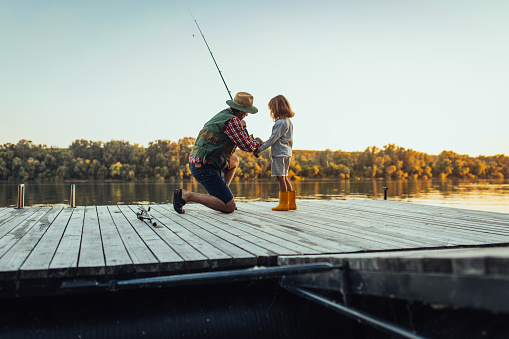
Camping with Children

By David | Jun 28, 2009

It’s true that when you go camping with your kids, you need to double your effort, time, and most of all, your patience in packing, planning, and preparing for the trip. Yes, camping with kids seems a little more tiring and stressful than the usual camping trips when it was just you and your spouse.

Aside from the thorough preparation, consideration of the kids’ needs take top priority, leaving little or no room for you and spouse’s. Camping is an experience the kids will remember their whole life so it’s well worth it.

Parents seldom get to spend much quality time with their kids so camping with kids can be such a rewarding experience. If you love you kids so much, you woudn’t mind putting in all the extra effort involved.

Here are some tips you can start out for a smooth camping trip:

- Your kids love to be involved when it comes to preparing for an exciting trip so what why not let them. It’ll teach them some things about planning and preparation. For example, do they want to go hiking or fishing or both? Allow them to pack their own things while supervising them along the way.

Kids would do anything to prove something including being responsible so treat them like responsible adults by making them see the value of their opinions.

- You don’t need an expensive sleeping bag for kids. A cheap children’s sleeping bag does the job well enough.

- If you do backyard camping beforehand you’ll discover anything that you missed during planning and preparation so you can adjust accordingly.

- Make sure you try using your camping gear at home to make sure that they are working perfectly.

- To prevent unwanted incidents, set up some safety rules like not wandering too far away from camp and not eating wild berries.

- Prepare some stories to tell for gathering round the campfire at night.

- Showing the kids the wonders of nature by taking them on hikes will teach them to respect the natural beauty.

- Don’t forget to teach them how to keep themselves safe at the camp. No playing with fire and no swimming in the lake alone are just some of the many rules they have to be familiar about.

- Creating games out of camping chores will get the kids interested in doing them

- Carry some binoculars so you can take the kids birdwatching as one of your camping activities.

- Apply insect repellent and sunscreen on your kids.

- A flashlight or glow stick will help the kids feel more secured at night.

- Do some star-gazing.

- The first aid kit is essential so don’t leave it behind.

- Have some night snacks. Not inside the tent of course. Before you go to sleep, a few chats and chips will surely be a great finale to a great day.

- Bring toys that will make the camping even more fun. For instance, a kiddie magnifying glass will make exploring of insects even more interesting.

- Don’t forget to pack extra batteries for the camera and lights.

Family camping trips are a fun way to spend quality time with your children. Although it takes double the effort, just seeing the delight on their faces or hearing their squeals of laughter all make the trip worthwhile.

Reduce The Weight of Your Shelter for Lightweight Backpacking

By David | Jun 26, 2009

Hiking Lightweight is more popular than it was before. Having less weight on your back while hiking is really more enjoyable. You feel free, unburdened, and close to nature. Your tent or shelter is the best place to start if you want to reduce your pack weight.

There have been some good lightweight shelter options for many years, especially if you backpack with a partner. The weight of the tent can be split between the two of you. One carry some some parts and the other carry the rest.. However there are now more options for lightweight two person tents and older models simply don’t qualify as ultraweight anymore.

Many tents are still overkill the ultralight backpacker. Tent makers don’t want to ever see their tents returned for any reason, so it’s easier for them to use heavier, cheaper materials. A tent will last for many years if you take care of it well enough. Mainstream tent makers are still outperformed by specialty tent makers in the ultralight field.

With the introduction of ultralight silicone-impregnated nylon, 2-person tents are now in the two to three pound range. One person tents are even lighter, obviously. It’s more than just the fabric that has gone lighter. Carbon fiber is now the standard material for tent poles. A 45″ tent pole can now weigh less than two ounces. Many new tents are designed to use a hiking pole as the tent pole. This means that you don’t need to even carry tent poles anymore. Further reduction in weight comes from the stakes which are now titanium rather than aluminum.

A tarp can be used instead of tents if you want to save more weight. It’s enough to keep the dew from settling on you, and it’s a great way to feel closer to nature. Some tarps are even designed to do double duty as your rain gear. Using gear that serves multiple purposes is one of the core principles of ultralight backpacking. However if you use tarps and want extra protection from the rain, a lightweight bivvy or sleeping bag cover can be as light as six to seven ounces. A ground cloth is light so it’s wise to include it in your gear for extra protection as well.

If you need more mosquito protection than a coating of your favorite repellent gives you, you can wear a mosquito head net that weighs just .6 ounces. Use a no-see-um netting and configure it to stay away from your face if you want something less confining.

In dry climates where you’re only concerned with insects, you can use a bug bivy that’s in the four to seven ounce range.

Most lightweight tents are not freestanding like your old dome style tent. However, they’re easy to set up and don’t have a separate fly. Instead the tents rely on well-designed ventilation on all sides.

An ultralight one-person tent can be used if you’re hiking alone. Your tent should be as light as possible becaue there won’t be anyone to share the burden with. But it’s common for a solo hiker to use a 2 person tent because it provides additional space for comfort and gear.

Look closely at all the new options for ultralight shelters. See which ones have the features to fit your needs.

An ultralight tent doesn’t necessarily sacrifice comfort and you can have comfort both comfort at camp and while hiking with the right kind of tent.

Plan for Getting Lost Before Your Trip

By David | Jun 25, 2009

Before you need to signal for help, one of the best ways to be sure you are found is by taking the time to plan to be found. Following these survival tips will greatly help. While you’re traveling, leave a travel plan with an accountable, trustworthy individual at home. List the times you expect to be at points along the way. Include your travel route and note your arrival time.

If your itinerary changes, let your contact person know right away. Make notes in your itinerary that show contingency plans. Arrange planned gathering places in case members of your party get split up. This will enable rescuers will know where to search if you are missing.

It’s also helpful to include entries about the physical condition of the group members, medicines, tents, clothes, water and contact information for immediate family and physicians.

Daniel Boone once stated, “I have never been lost, but I will admit to being confused for several weeks.”

Should you arrive at a similar state of confusion and require assistance, there are several ways to signal for help.

You will be able to employ an assortment of items in order to signal for aid. This includes flame, smoke, torches, brightly colored clothing, mirrors, whistles, or battery-powered devices. Remaining composed can make it possible for you to apply your resourcefulness and contrive a constructive means to signal likely assistance. Knowing how to accurately assess your options can save your life.

If you should lose your way, your position should be marked right away. In order to easily identify your position, create a pile of rocks, brush, or break some twigs. This will become your point of origin. Should attempts to find your way out fail, home base is where you will return. This will also be the place you wait for rescuers.

If you decide to leave your point of origin, write a short letter and place it at the marking. Tell your plans and your direction of travel. While you journey tag the path at regular points with stones, broken branches, or some other easily recognizable sign to show where you’ve walked. This helps emergency personnel locate you.

Discover exactly how to signal for help and many more ideas from Survival Scoop.

School Is Over For Summer And Now It Is The Ideal Time To Go On A Family Camping Trip

By David | Jun 21, 2009

The best time of year, Summer, is finally here! For many going on a camping trip is a big part of summer. However if you do not plan accordingly your trip may not be as enjoyable as it should or could be. Part of that planning should include taking the right camping gear. It is not all about the gear of course. Other important considerations include location location location.

First things first. A place to sleep that provides shelter is very important. This can be as simple as a tent or as advanced as staying in a cabin or taking a motor home. To each his own and of course it also depends on what someone can afford to use. Tent sizes and selection vary depending on your group size and budget. What ever you choose make sure it is large enough for your group size.

Something to sleep on such as a mattress helps a lot. With respect to sleeping bags there are different kinds that are made for different types of weather conditions. If you are going somewhere cold make sure to check what temperatures the sleeping bag is made to keep you warm in otherwise your nights may be colder then you wished.

Cooking equipment is a must. Using stuff from your home kitchen helps save money but more equipment will likely be needed. You will have a lot of options to choose from.

To prepare the wise way you will need to do some research. One of the best and easiest ways to research and learn more about what types of products you will need and if they will meet your needs is to read some camping gear reviews online. Using online information can be a huge help.

So go and get ready for a great summer spent in the wild or not so wild out doors. Spending time out in nature if fun for the whole family and can be a really rewording experience that your children will always remember. Just make sure to buy the right gear to avoid a camping nightmare and take the time to plan.

Remember to take a note pad so you can keep track of what you should have brought on your trip. This should help you for the next time so you can better plan. Each camping trip is a learning experience so the more you go camping the more you learn what you will need next time.

The Benefits of Having Good Archery Hunting Equipment

By David | Jun 1, 2009

Archery Hunting Equipment

The thrill of hunting has captivated many a person over the years. Whenever a group goes on a hunt, feelings of solidarity and friendship are close behind. Some individuals hunt because they choose to collect food this way. Still others just love the primitive nature of the outdoors. Whatever the circumstances, archery is a type of hunting that many people prefer. In days of old, killing game using bows and arrows was ideal. However this has been outlawed in the UK. Nowadays you must be shooting at a target if you’re using a bow and arrow inside the country. Anyone who suggests that this can’t be as challenging may be surprised to learn that if hunters within the UK obtain the right archery hunting equipment, their encounter with the elements can be very pleasurable and fun.

Clearly the first thing you need to set your sights on is getting the right arrow. Quality archery arrows are probably the most important tools in the sport of bow hunting, when you think about it. Although please remember that it is illegal to shoot live game here, so do not use bows for hunting if you are in the UK.

Archery Hunting Equipment UK

Currently the most utilized bow shaft is made of an alloy/carbon composite. Before that, aluminium was used a lot since fibreglass lacked flexibility and wood was too easily warped. Those using arrows made of aluminium recognized the plus side to its precision, stability, and simplicity. Carbon fibre arrows provide more excellent strength advantages. There’s even a better-quality shaft made of a carbon-aluminium compound. By and large, archery equipment is much better than older, more traditional archery and medieval timeframe when the singular option for arrow shafts.

Hunting Equipment UK

Following your selection of arrows, you’ll need to choose the archery bow you need to match. Archery bows are parts of hunting equipment which must be the correct size and weight, especially depending on the arrow you’d like to use. Obviously you want to avoid an incident in which you can see the target but can’t hold the drawback for a long enough period to shoot properly. That normally happens when your body weight and the weight of the bow are a mismatch.

In conclusion, I want to remind you that archery hunting equipment in the UK is not for hunting live game and is not restricted to bows and arrows. It also consists of sights, stands, safety harnesses and various gear designed to assist you in having a safe and pleasant trip.

© 2008 Great Outdoors - Activities For The Great Outdoors, - Theme | Privacy | Disclaimer | Terms | Contact | Outdoor Resources